

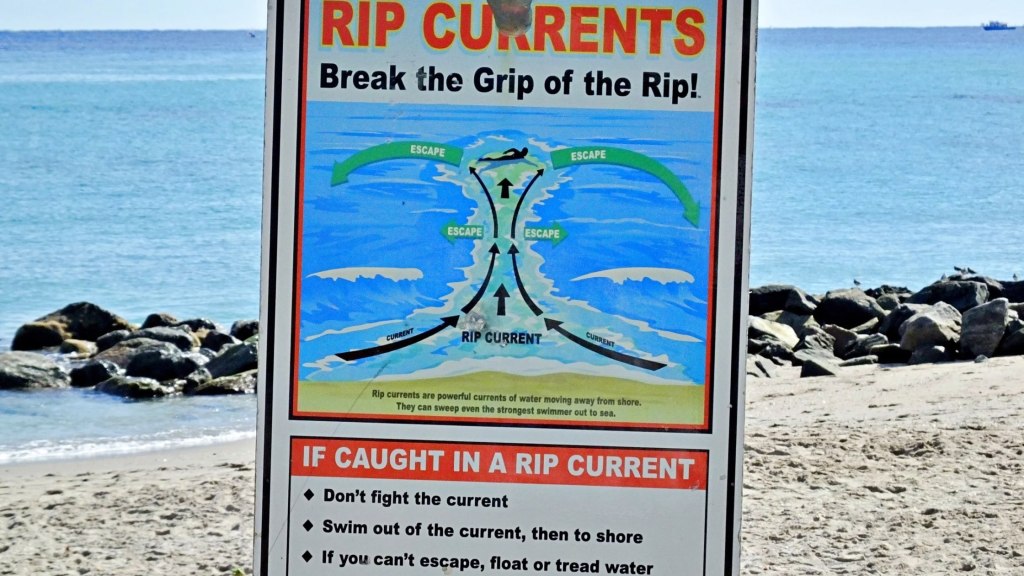
When it comes to ocean safety, understanding the differences between rip currents and rip tides can be a lifesaver. These powerful water phenomena are often confused, but they have distinct characteristics and effects. Here, we’ll break down what rip currents and rip tides are, how they form, their dangers, and how you can stay safe.
What is a Rip Current?
A rip current is a narrow, fast-moving channel of water that flows from the shore out to sea. It can occur at any beach with breaking waves and is often mistaken for a rip tide.
How Rip Currents Form
Rip currents form when waves break more strongly in some areas than in others. This variation causes water to pile up onshore, and the excess water then returns to the sea through the path of least resistance. This path is the rip current, which moves swiftly away from the shore, often cutting through sandbars and other underwater structures.
Identifying Rip Currents
- Color Difference: Rip currents often appear darker than surrounding water due to their deeper channels.
- Choppy Surface: The surface of a rip current can be choppier and may have a foamy appearance.
- Break in Waves: There might be a noticeable gap in the breaking waves, as the current flows out to sea.
Dangers of Rip Currents
Rip currents are powerful and can pull swimmers out to deeper waters quickly. They are responsible for the majority of beach rescues and can be deadly if not handled properly.
Recognizing and Avoiding Rip Currents
- Check Conditions: Before swimming, always check the local beach conditions and heed warnings.
- Swim Near Lifeguards: Choose beaches with lifeguard supervision.
- Know How to Spot Rip Currents: Learn the visual signs of rip currents and avoid swimming in these areas.
What to Do if Caught in a Rip Current
- Stay Calm: Panic can make the situation worse.
- Don’t Fight the Current: Swim parallel to the shore until you are out of the current, then swim back to the beach.
- Signal for Help: If you can’t escape, float or tread water and wave for assistance.
What is a Rip Tide?
Rip tide is a term often incorrectly used to describe rip currents. However, a rip tide refers to a strong tidal flow of water within estuaries and other enclosed tidal areas, not to the open sea.
How Do Rip Tides Form?
Rip tides occur when the tide pulls water through inlets, around estuaries, and into enclosed areas like bays or harbors. These strong currents are caused by the rising and falling tides and are most noticeable at narrow points where the water is forced to move more quickly.
Identifying Rip Tides
Rip tides are less common at typical swimming beaches and are more often associated with tidal changes in confined coastal areas. They are usually stronger during high tide or low tide transitions.
Dangers of Rip Tides
While rip tides are powerful, they are usually less of a concern for swimmers in open beach areas. However, boaters and those near inlets and estuaries need to be cautious of these strong tidal currents.
How To Avoid Rip Tide Dangers
- Boating Precautions: Boaters should be aware of tidal schedules and avoid navigating through narrow inlets during strong tides.
- Stay Informed: Be aware of local tidal conditions, especially if you are in an estuary or bay area.
Understanding the differences between rip currents and rip tides is crucial for beach safety. Rip currents can pull swimmers out to sea and are more common on open beaches, while rip tides are strong tidal flows within enclosed areas. By recognizing these dangers and knowing how to respond, you can enjoy your time at the beach more safely. Always respect the ocean’s power and stay informed about local conditions to ensure a fun and safe experience by the water.
For more detailed information on beach safety, visit the National Ocean Service’s website and the United States Lifesaving Association’s resources. Stay safe and enjoy the ocean responsibly!
 Bama Beach Weather
Leave a comment