

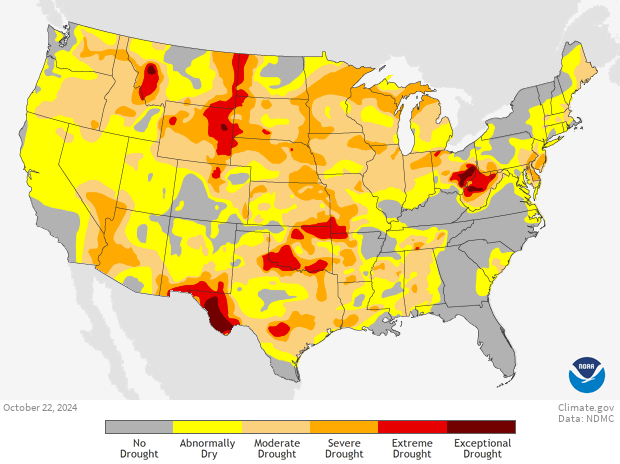
Wildfires are dangerous, uncontrolled fires that burn in forests, grasslands or brush. They can spread very quickly and can be hard to control once they start. Each year, wildfires burn roughly 7 millions of acres of land across the United States, especially in the Western U.S. However, wildfires can occur anywhere, particularly in areas facing drought or dry conditions.
How Do Wildfires Start?
Wildfires can begin from natural causes, like lightning, or from human activities. In fact, most wildfires are started by people, usually in one of the following ways:
- Campfires left unattended.
- Burning yard debris that gets out of control.
- Discarded cigarettes or fireworks.
- Sparks from equipment like lawnmowers or vehicles.
When the weather is dry, even a tiny spark can turn into a huge fire. This is especially true in places where there hasn’t been much rain, and the grass and trees are very dry.
Fire Weather Warnings
To help prevent wildfires, weather experts issue Fire Weather Warnings when conditions are dangerous. Here’s what they mean:
Red Flag Warning
This warning means that conditions are perfect for a wildfire to start and spread. This happens when it’s dry, windy, and the humidity is very low. During a Red Flag Warning, it’s best to avoid anything that might cause sparks or fire.
Fire Weather Watch
This is a heads-up that wildfire conditions might happen in the next day or two. It’s a good time to be extra careful and pay attention to local weather updates.
How to Prevent Wildfires in Dry Weather
When the weather is dry or there’s a drought, the chance of a wildfire increases. Here are some easy ways to help prevent fires:
1. Follow Burn Bans
During dry periods, local officials often issue burn bans, which means no outdoor burning. This includes:
- Campfires or bonfires, including open flame fire pits.
- Burning yard waste like leaves and branches.
A single spark from a small fire or grill can ignite nearby dry grass or trees, or even a structure like a home or garage. Always check with your local fire department or government website for current burn bans.
2. Be Careful with Equipment
Outdoor tools and vehicles can create sparks or get hot enough to start a fire. Here’s how to stay safe:
- Avoid using lawnmowers, chainsaws, or other tools that can spark during dry, windy days.
- Don’t park cars or trucks on dry grass, as the heat from the exhaust can start a fire.
- Make sure all equipment has a spark arrestor, which helps prevent sparks from escaping.
3. Create A Fire Break In Your Yard
If you live near dry grass or forests, you can protect your home by creating defensible space around it. This means clearing flammable materials within a certain distance from your home, usually a 100 foot diameter. You can achieve this by doing the following:
- Remove dead plants, dry leaves and branches from around your home.
- Trim tree branches that hang near your roof.
- Use non-flammable materials, like gravel, for ground cover near your house.
- Keep gutters and roofs clear of dry leaves and other debris.
4. Dispose of Cigarettes and Ashes Safely
Even small embers from a cigarette or fire pit can start a wildfire. Follow these tips
- Always put out cigarettes completely and never throw them on the ground.
- Let ashes from fireplaces or grills cool completely before throwing them away.
5. Be Ready for Emergencies
Wildfires can spread quickly, so it’s important to be ready. Here’s how:
- Have a family evacuation plan and practice it regularly.
- Keep an emergency kit with items like water, food, clothes and important papers.
- Know at least two ways to leave your home or neighborhood if you need to evacuate.
Spread the Word and Stay Safe
During dry weather or drought conditions, wildfires are more likely to happen. Everyone can help prevent them by following safety rules like burn bans and paying attention to fire weather warnings. By being careful and staying informed, we can all help protect our homes, communities and nature from the dangers of wildfires.
 Bama Beach Weather
Leave a comment