

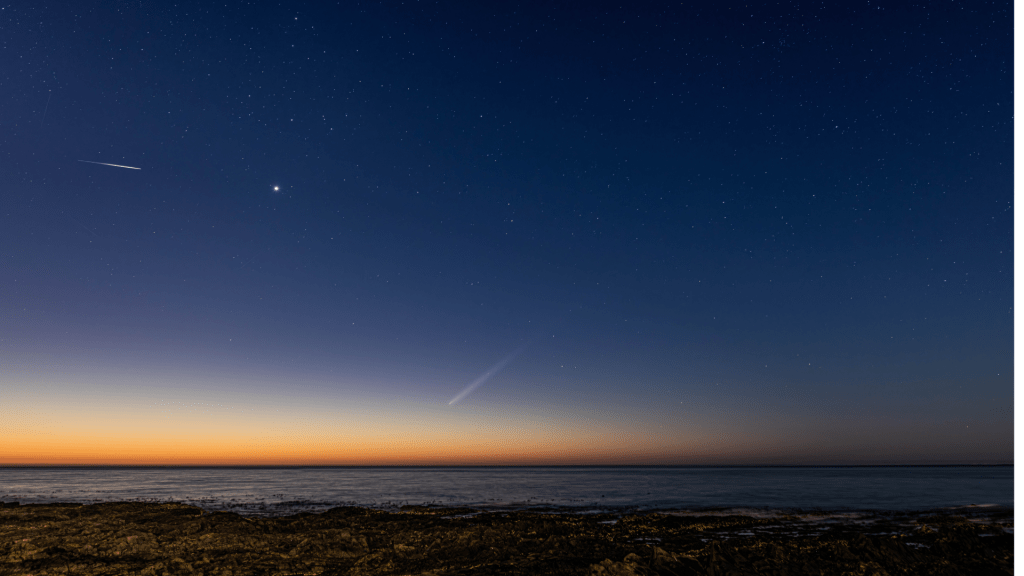
The annual Perseid meteor shower reaches its peak overnight Wednesday into Thursday, giving skywatchers across the Alabama Gulf Coast a chance to see one of the year’s most popular meteor showers.
The Perseids are active every summer, but this year’s peak comes with a big advantage: there will be very little moonlight to interfere with viewing. The shower peaks around the New Moon, leaving the night sky much darker than it would be during a bright lunar phase.
That means if the clouds cooperate, the Alabama coast could be a pretty good place to do some stargazing.
When is the best time to see the Perseids?
While the Perseid meteor shower is active throughout the night, the best viewing generally comes after midnight and during the hours before sunrise Thursday morning.
That’s because the part of Earth you’re standing on rotates into the direction of the meteor stream later at night, increasing the number of meteors that can appear overhead.
You don’t need any special equipment. In fact, a telescope isn’t particularly helpful for meteor showers because meteors can appear anywhere across the sky.
Find a comfortable spot, look up and give your eyes some time to adjust to the darkness.
How many meteors could you see?
Under ideal dark-sky conditions, the Perseids can produce dozens of meteors per hour, with theoretical peak rates approaching 100 meteors per hour.
But those numbers are based on excellent viewing conditions, and artificial lights from beachfront businesses, condos, homes and roadways can make some of the fainter meteors difficult to see.
So don’t be discouraged if you’re not seeing a shooting star every few seconds.
Sometimes you’ll go several minutes without seeing anything, followed by a bright meteor streaking across the sky.
Why do we get the Perseids every August?
The Perseids are created by Comet 109P/Swift-Tuttle, which leaves behind a trail of dust and debris as it travels through the solar system.
Earth passes through that debris trail every year around this time.
When those tiny particles slam into Earth’s atmosphere at extremely high speeds, they heat up and glow. Those brief flashes are what we see as meteors or, as we usually call them, shooting stars.
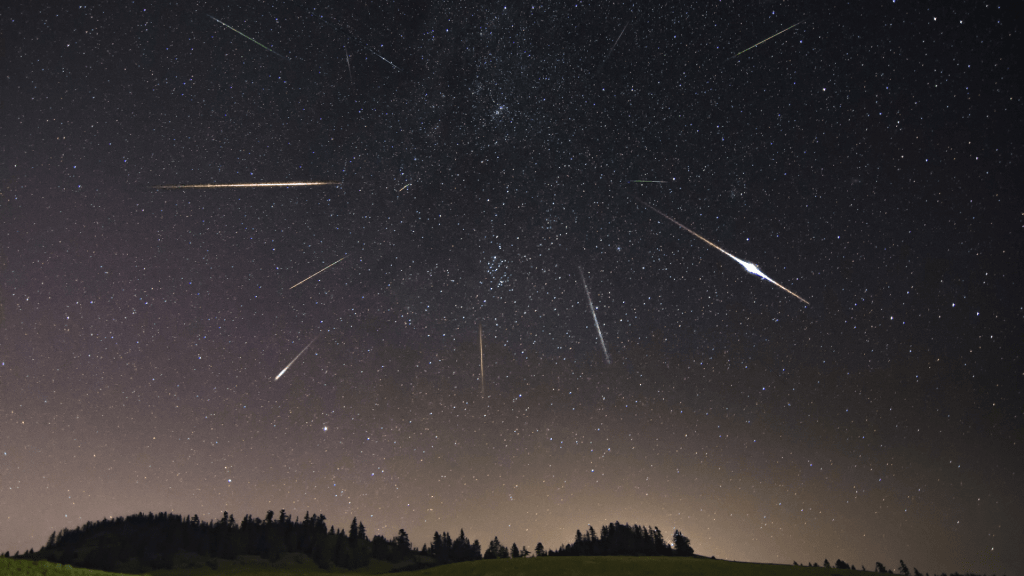
The meteors appear to originate from the direction of the constellation Perseus, giving the shower its name.
Where should I watch from the Alabama coast?
The darker the sky, the better.
That can be a little tricky along a popular area like the Alabama Gulf Coast, where artificial lighting is everywhere. Whether you’re in the middle of Fort Morgan, Gulf Shores or Orange Beach, try to get away from some of the brightest lights if possible
A darker section of beach or a location farther from major roads can make a noticeable difference.
And remember, you don’t have to face a particular direction. While the meteors appear to radiate from Perseus, they can streak across a large portion of the sky.
The best strategy is simply to find somewhere comfortable where you have a wide-open view.
 Bama Beach Weather
Leave a comment